An Open Letter to Mr. Masrour Barzani, Prime Minister of the Kurdistan Regional Government of Iraq.
Greetings,
Justice and equality are the cornerstones of effective governance. In the absence of an opportunity for direct, face-to-face dialogue—and with the intention of offering you a perspective that may differ from the narratives conveyed by certain loyal figures within our community on matters that deeply affect them—we are compelled, as former allies in a shared struggle and out of a sense of responsible concern, to address this open letter to you through public channels. We do so in the hope that it will be received with openness and consideration.
We wish to bring to your attention a number of urgent and longstanding issues affecting our Chaldean Syriac Assyrian people—issues that have remained unresolved for far too long, with no satisfactory solutions or restoration of justice to their rightful claimants. While it is true that these concerns have endured across successive government administrations, their continued persistence and deepening impact have reached an unacceptable point. Remaining silent is no longer a viable option.
We had hoped that your government would adopt a serious and committed approach to addressing these matters. Like many others, we were initially optimistic at the outset of your cabinet’s term—especially with the formation of a new ministerial committee, intended to complement previous efforts. However, much like the committees before it, this latest body has regrettably failed to deliver any tangible results or to meet even the most basic expectations related to these longstanding demands and concerns.
I write to you not with the intention of criticizing or undermining the government’s role or its ongoing efforts to fulfill its responsibilities and respond to the growing needs of its citizens—particularly in the face of intensifying internal, national, and regional challenges. However, it was expected that the government would give special and urgent attention to our people, whose very existence is now at risk. In light of this reality, a clear and targeted plan based on the principle of positive discrimination was both necessary and justified. Unfortunately, this principle has yet to be implemented, either in the Region or at the national level in Iraq.
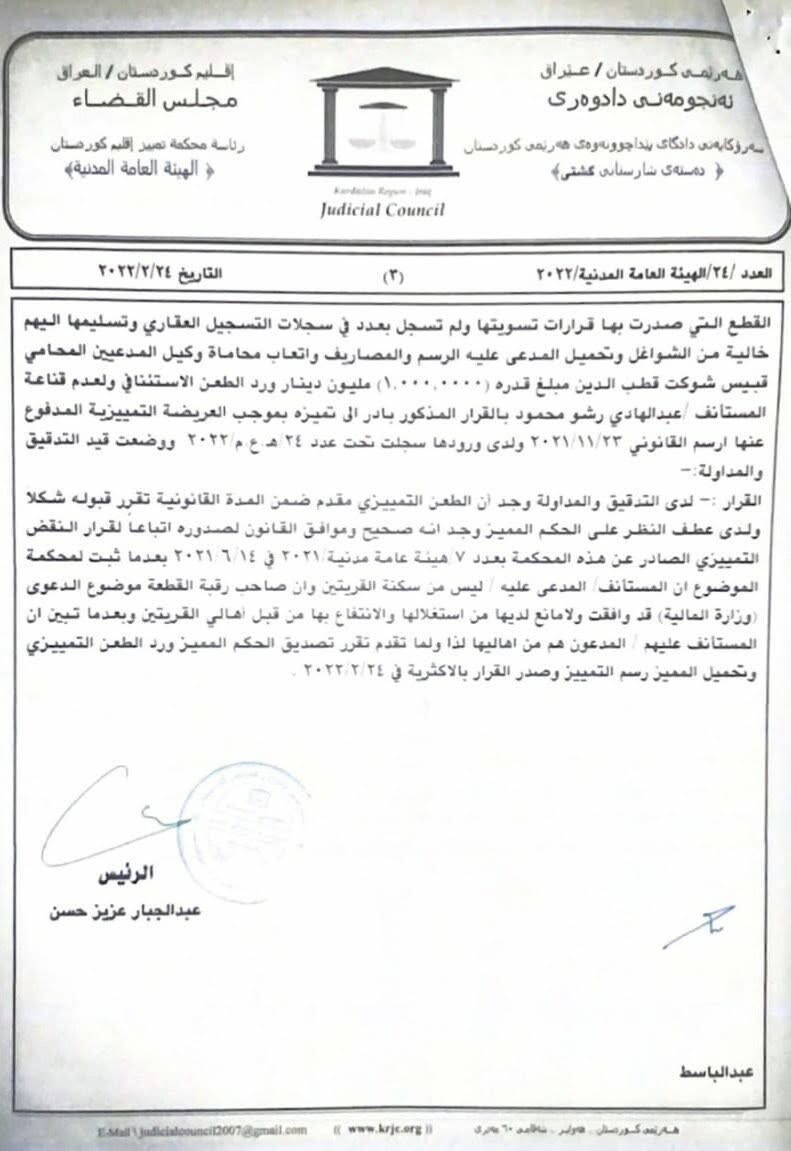
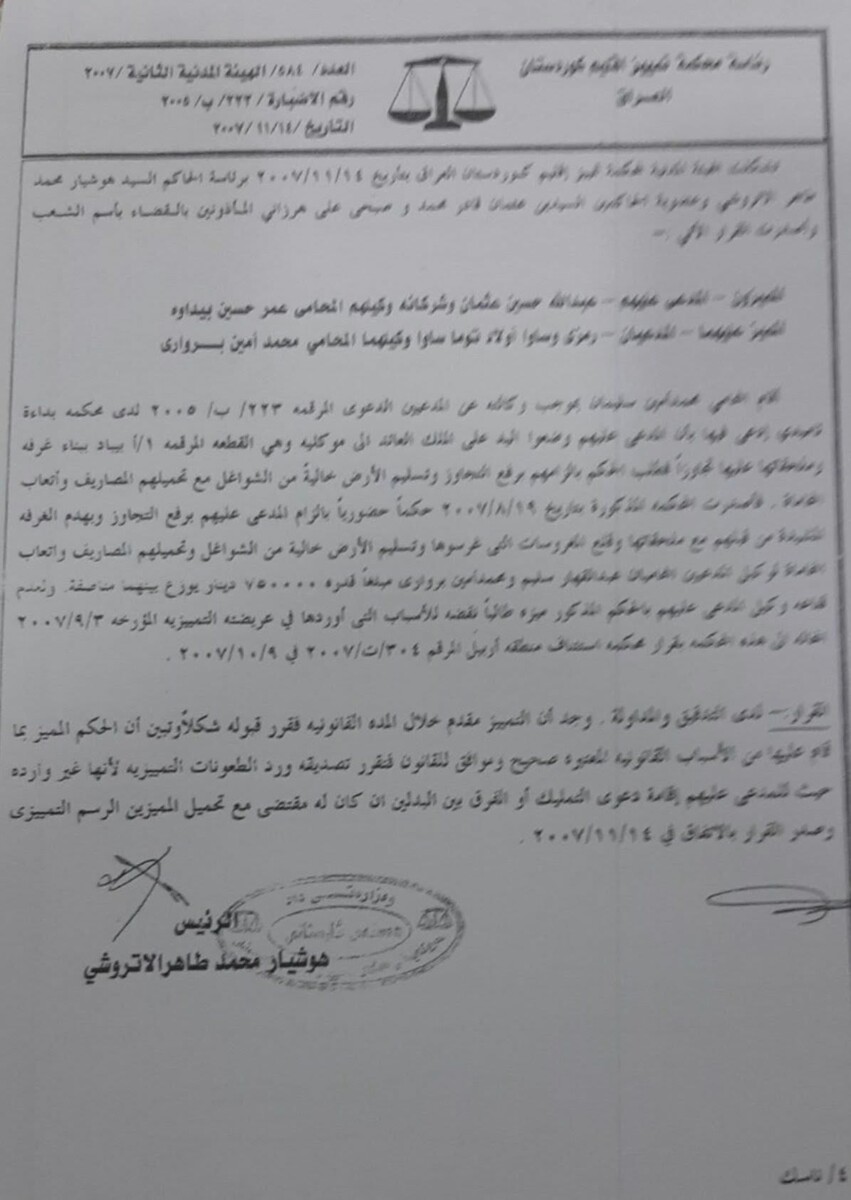
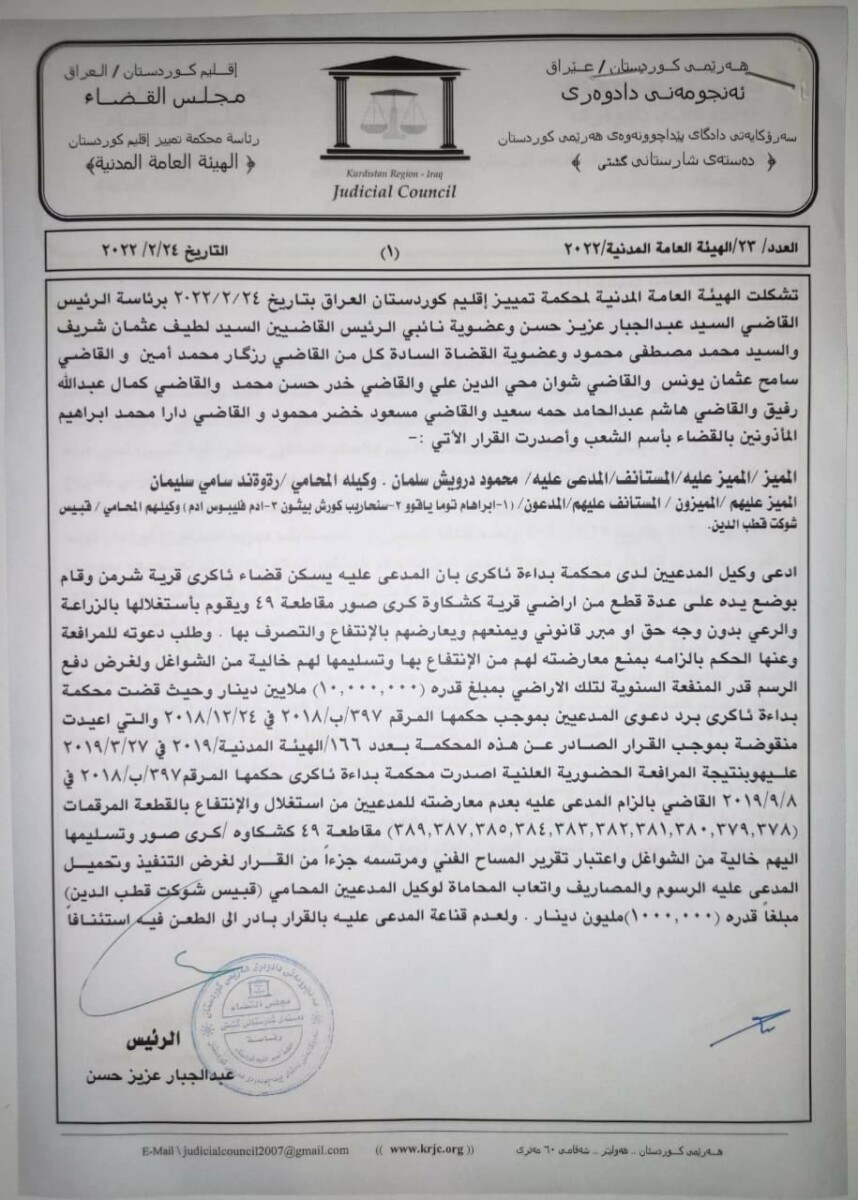
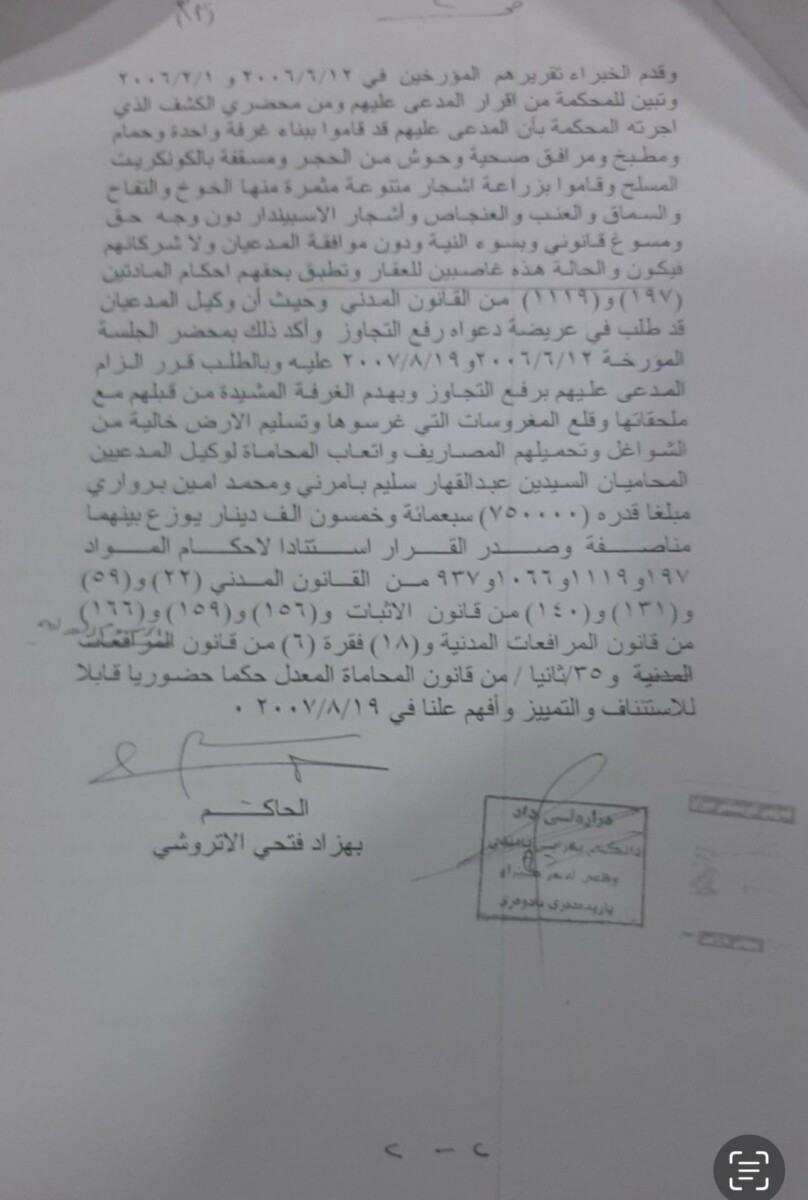
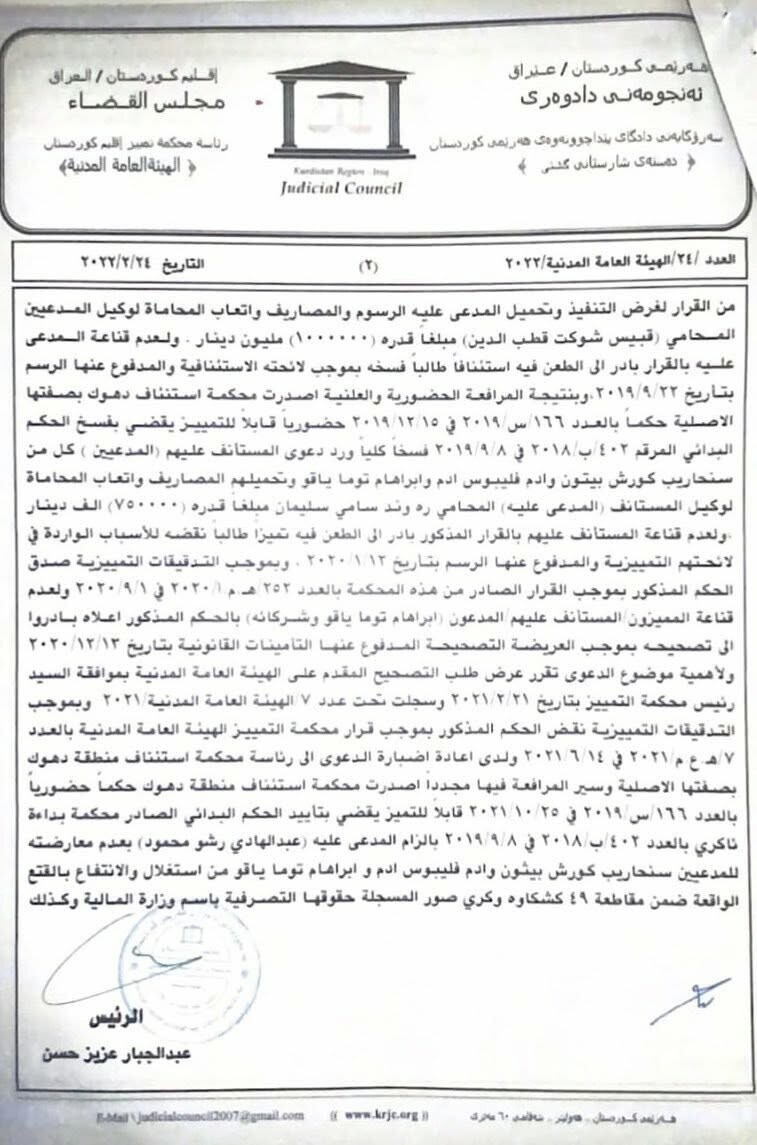
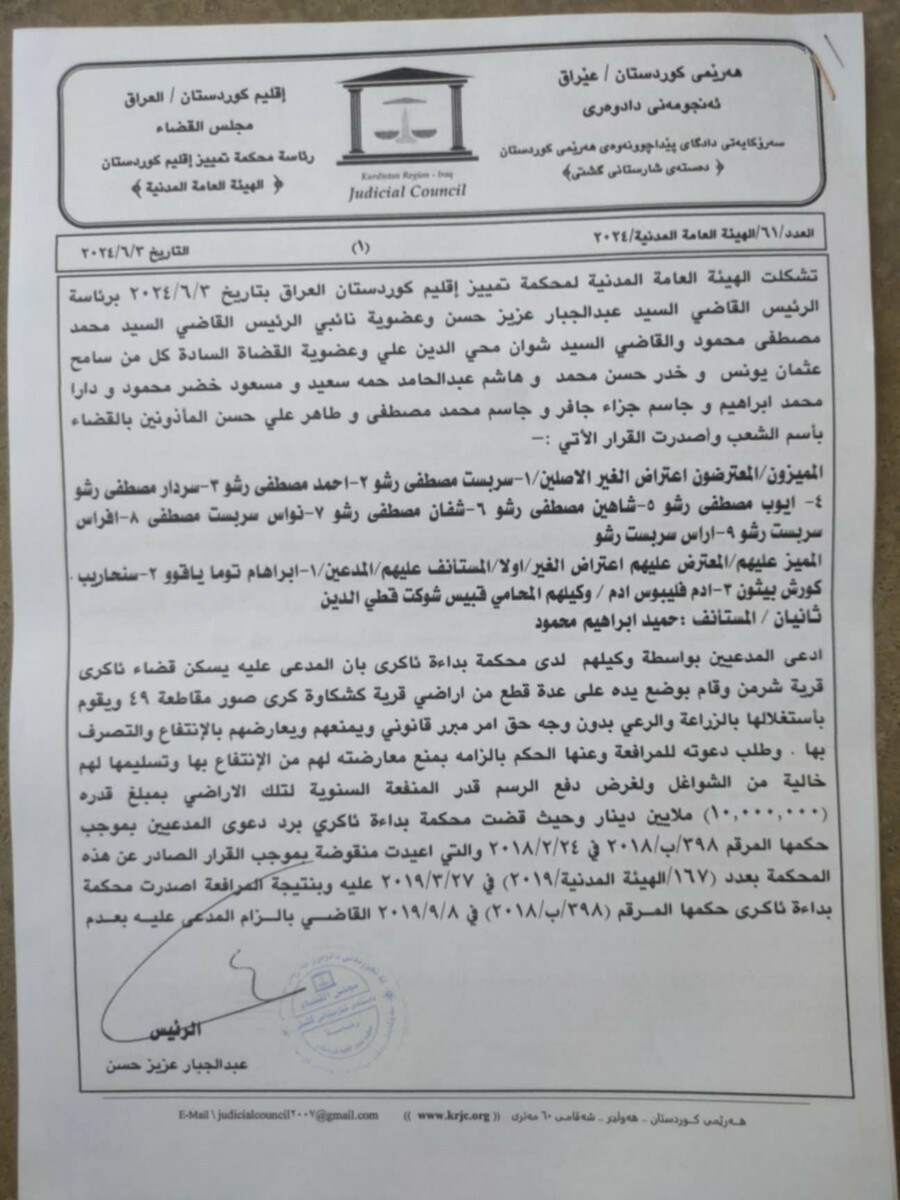
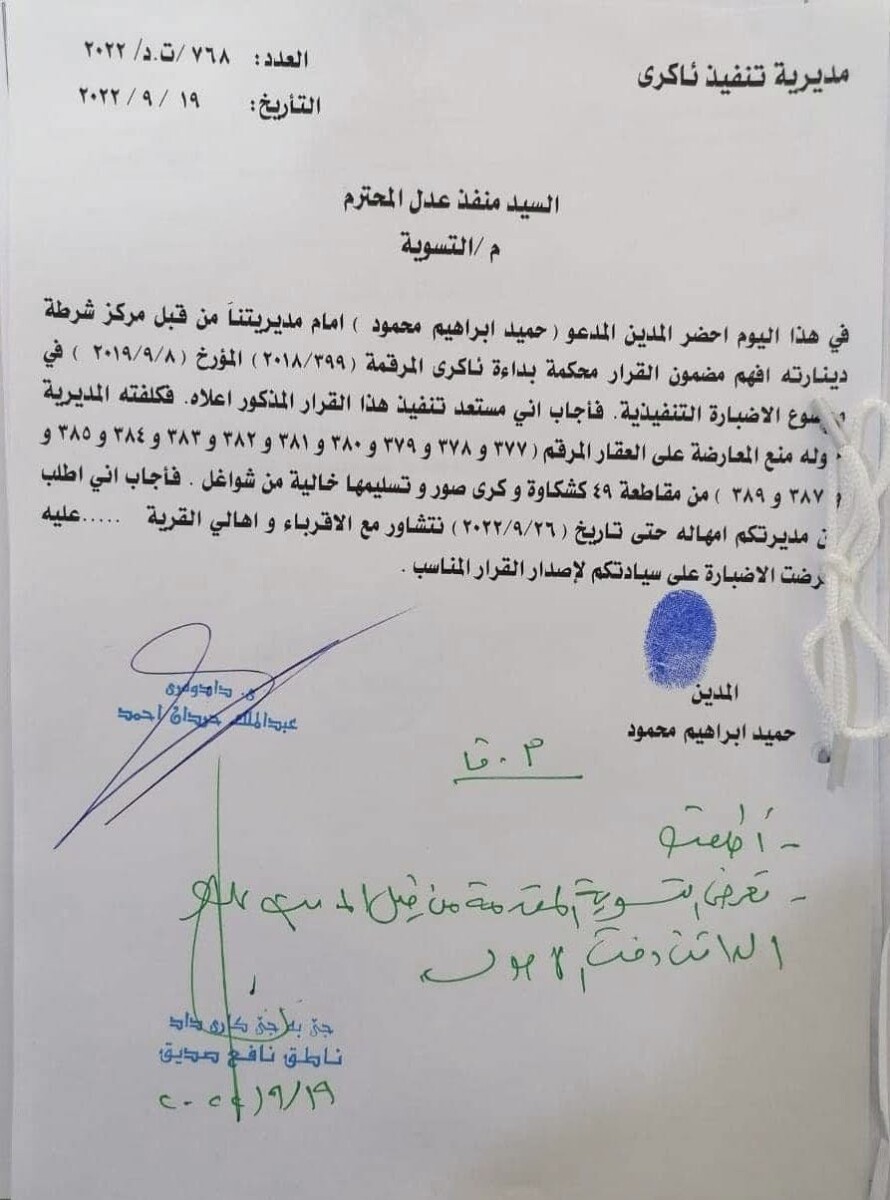
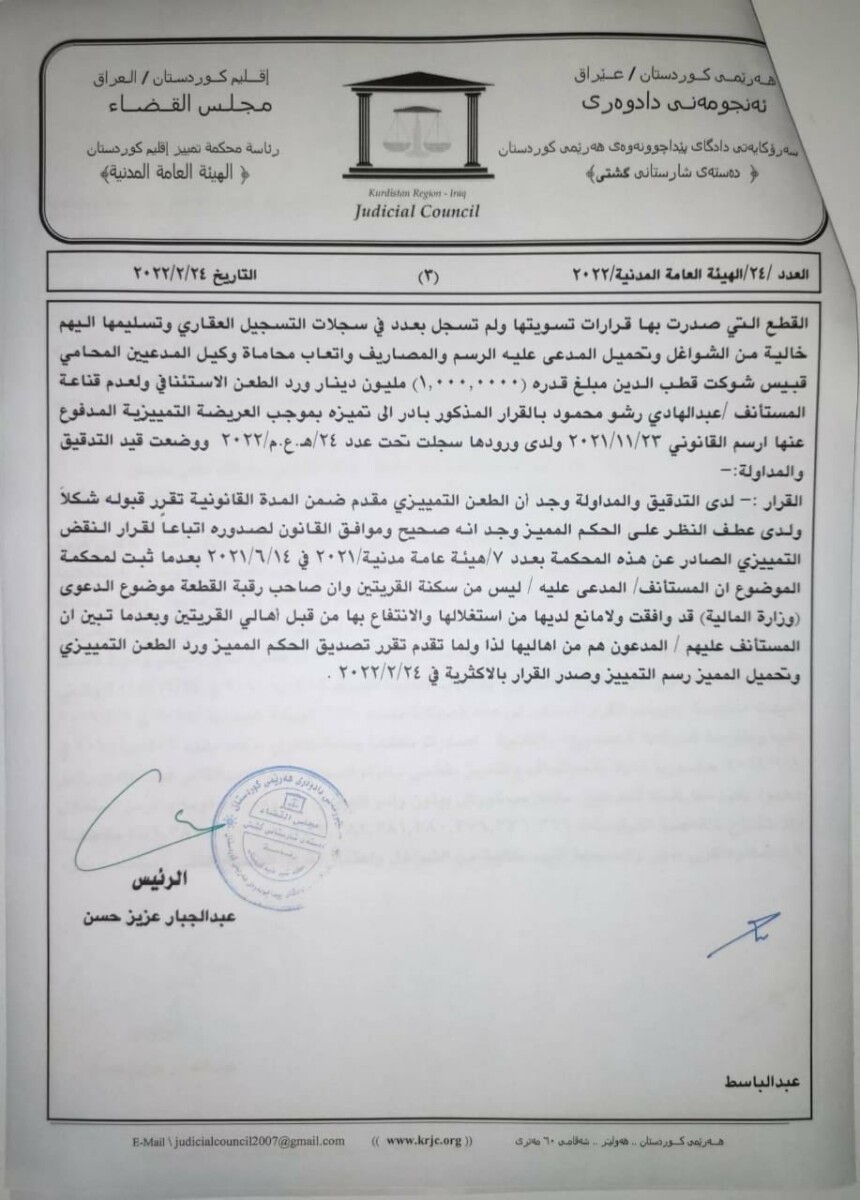
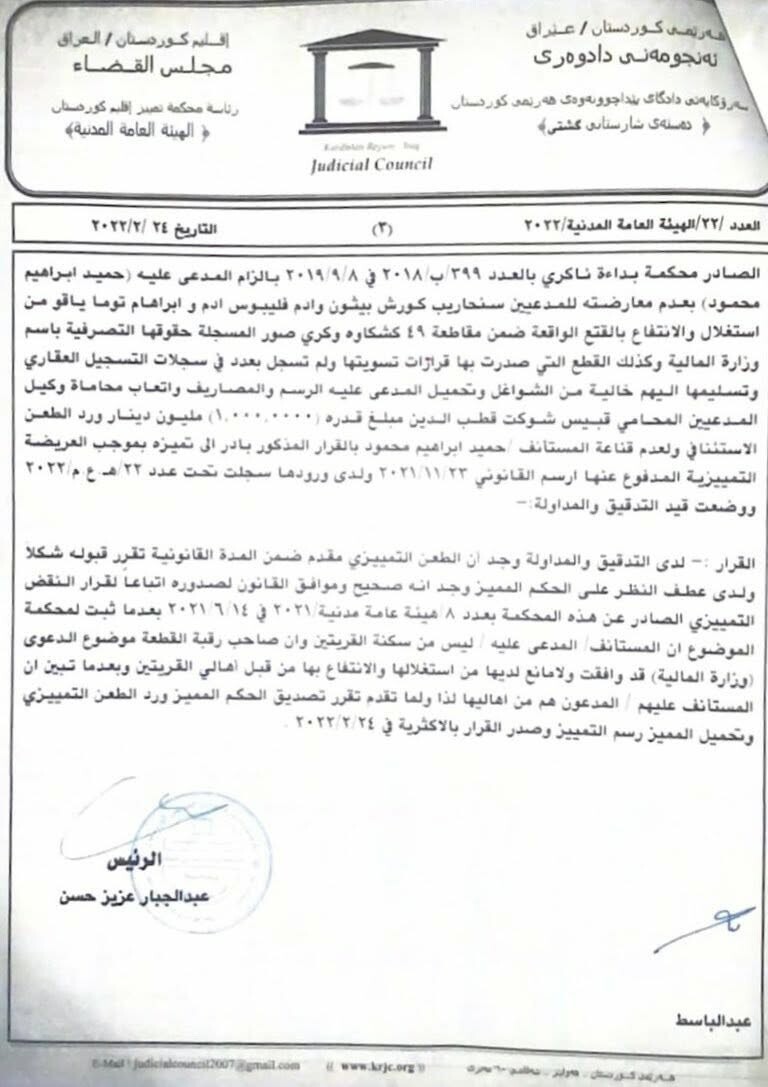
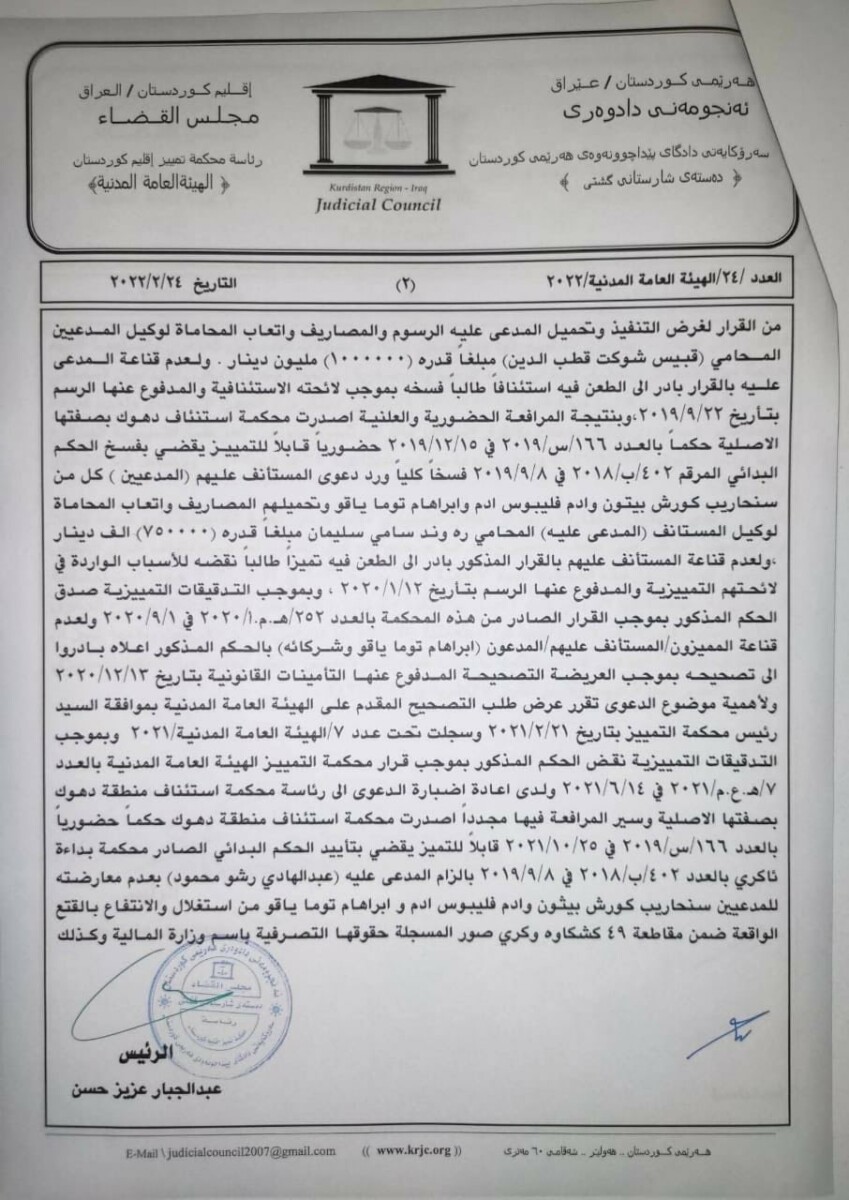
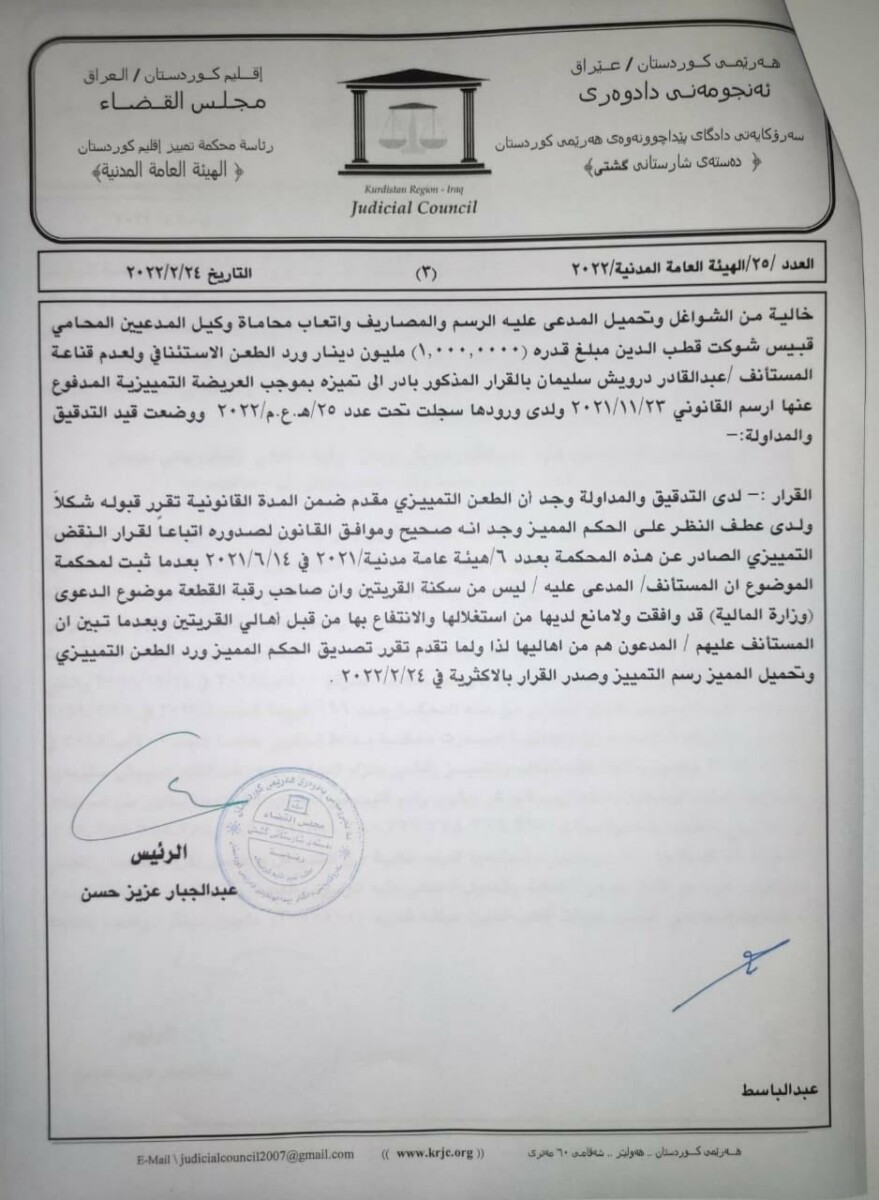
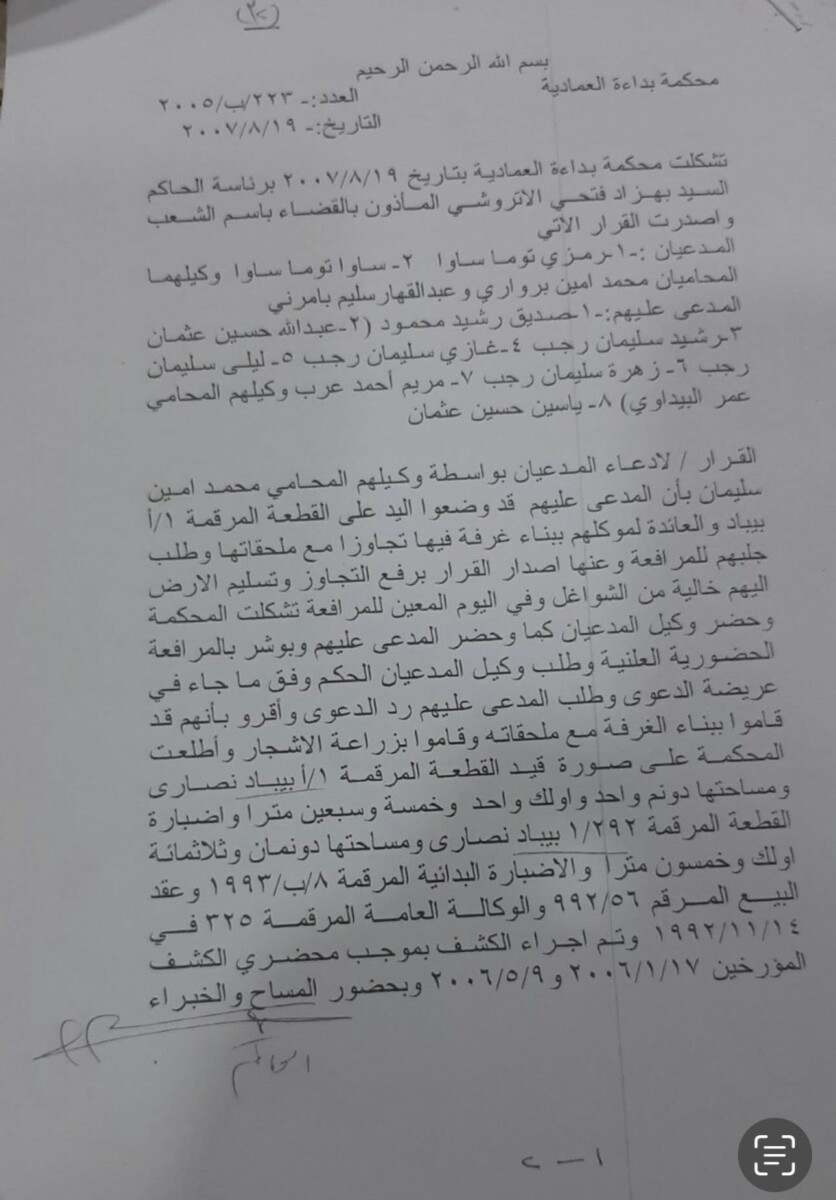
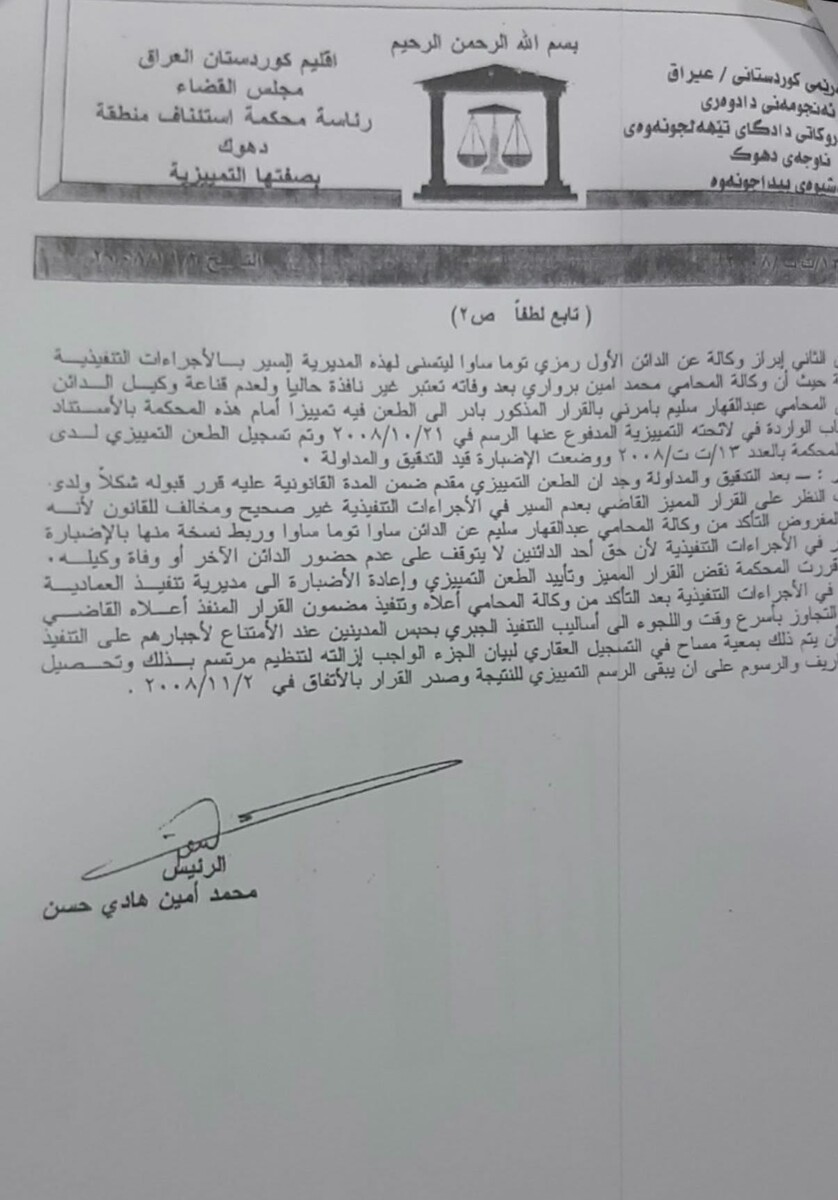
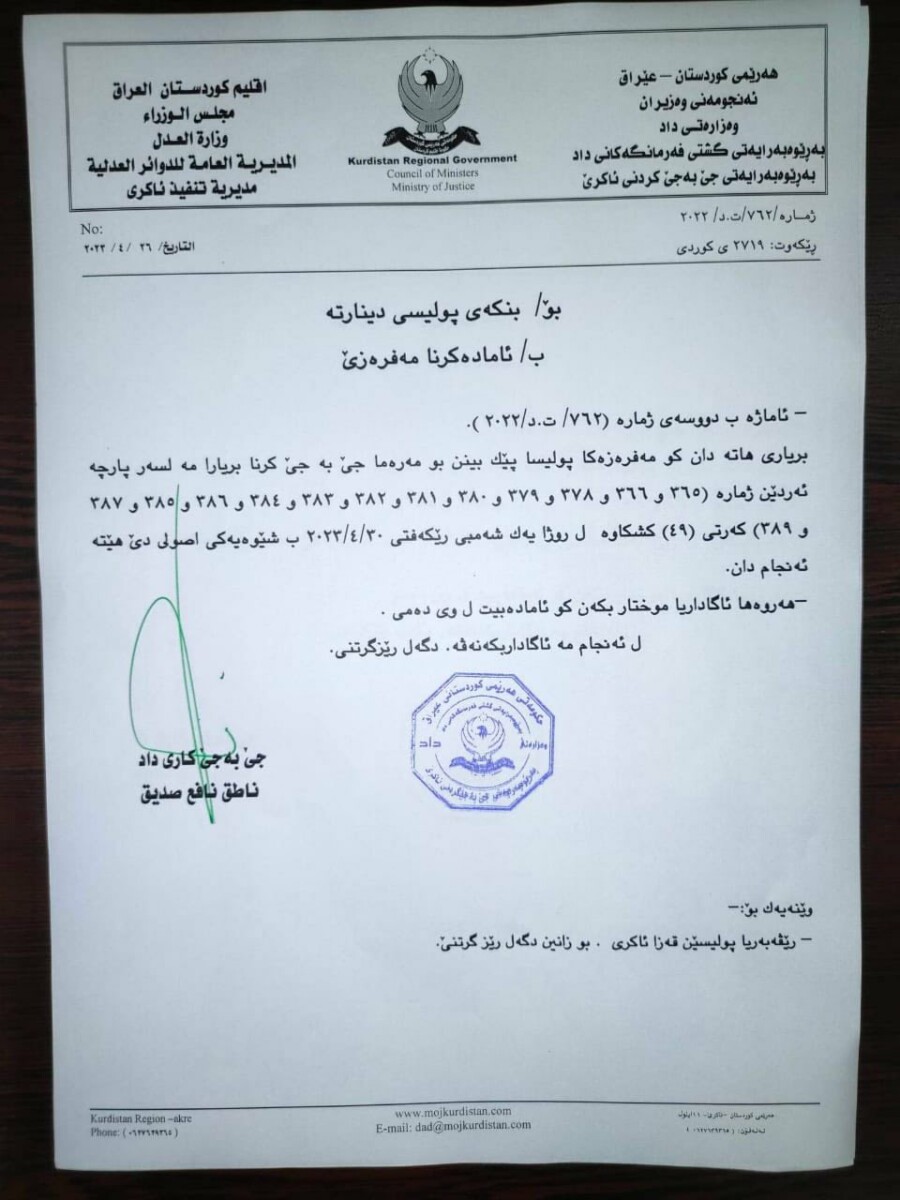
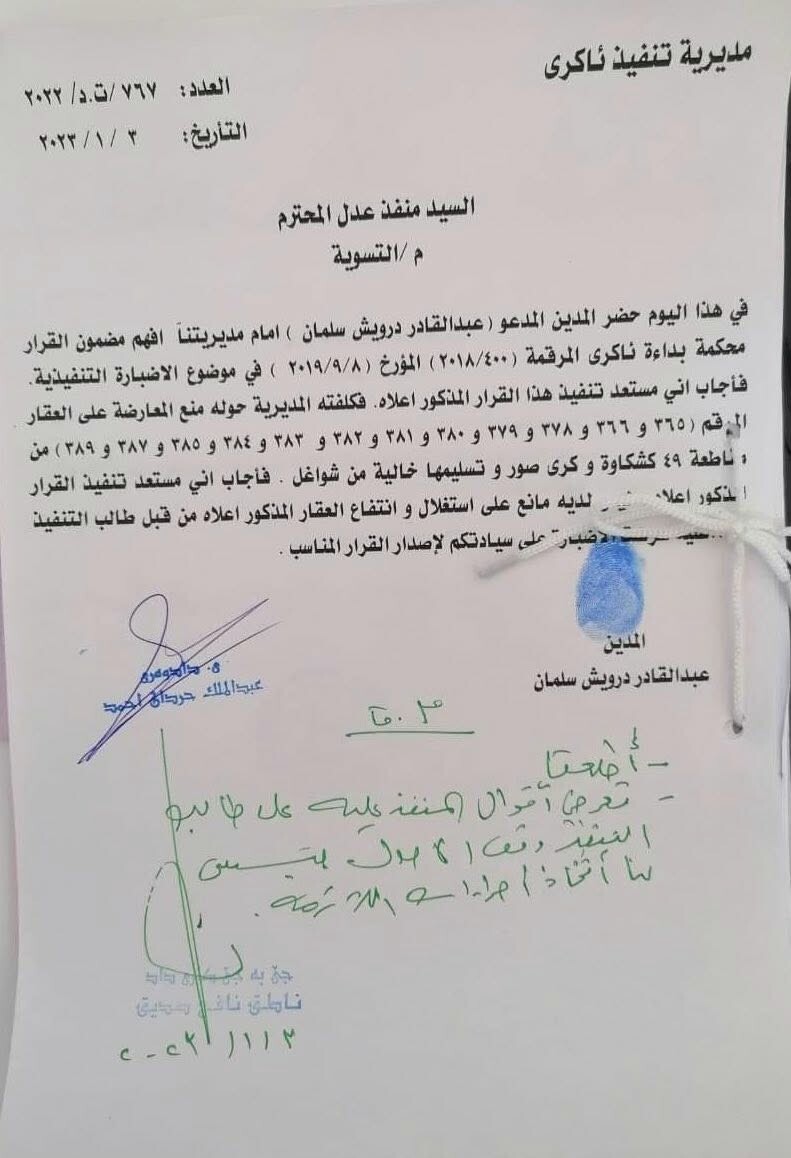
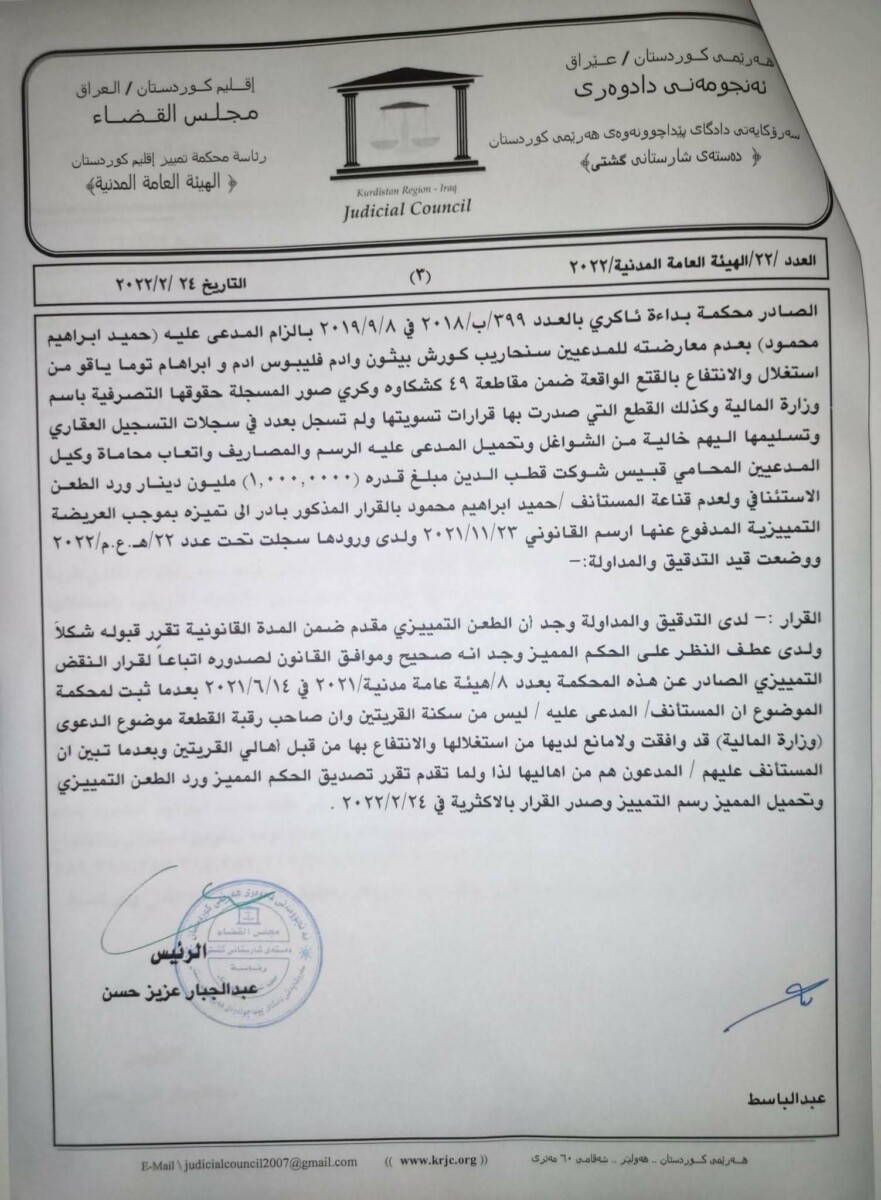
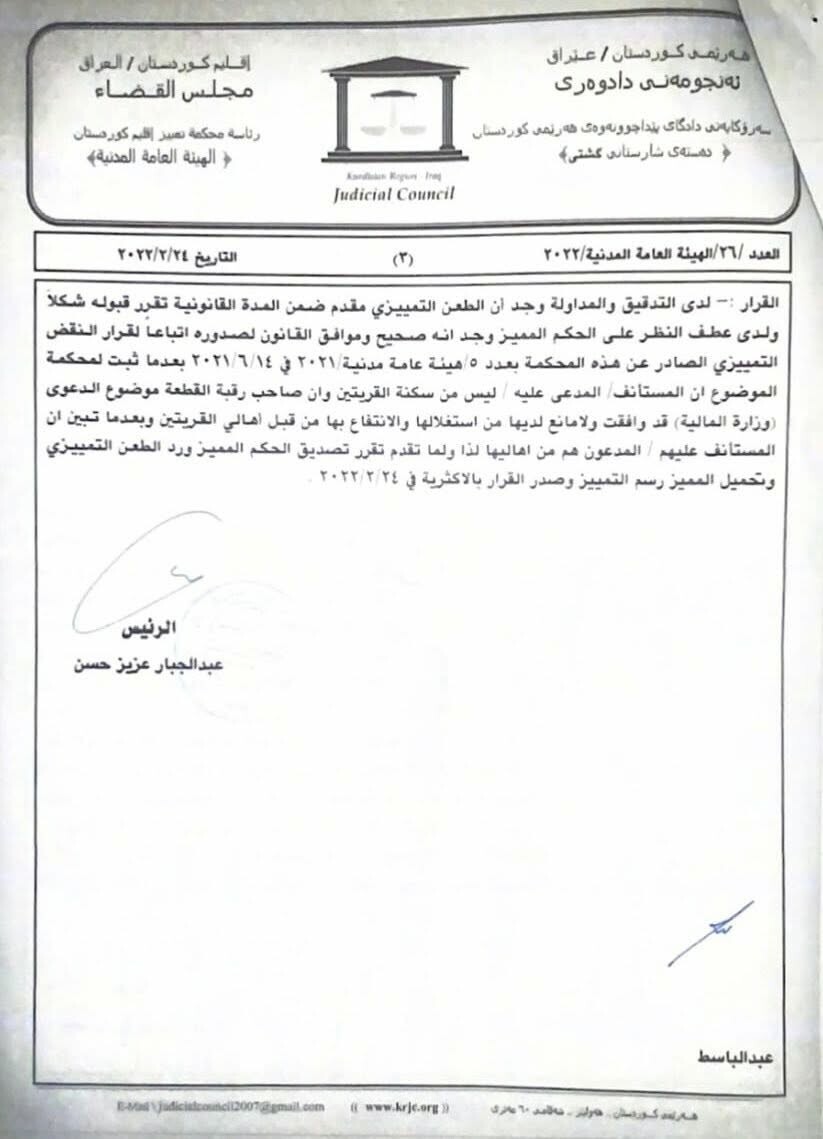
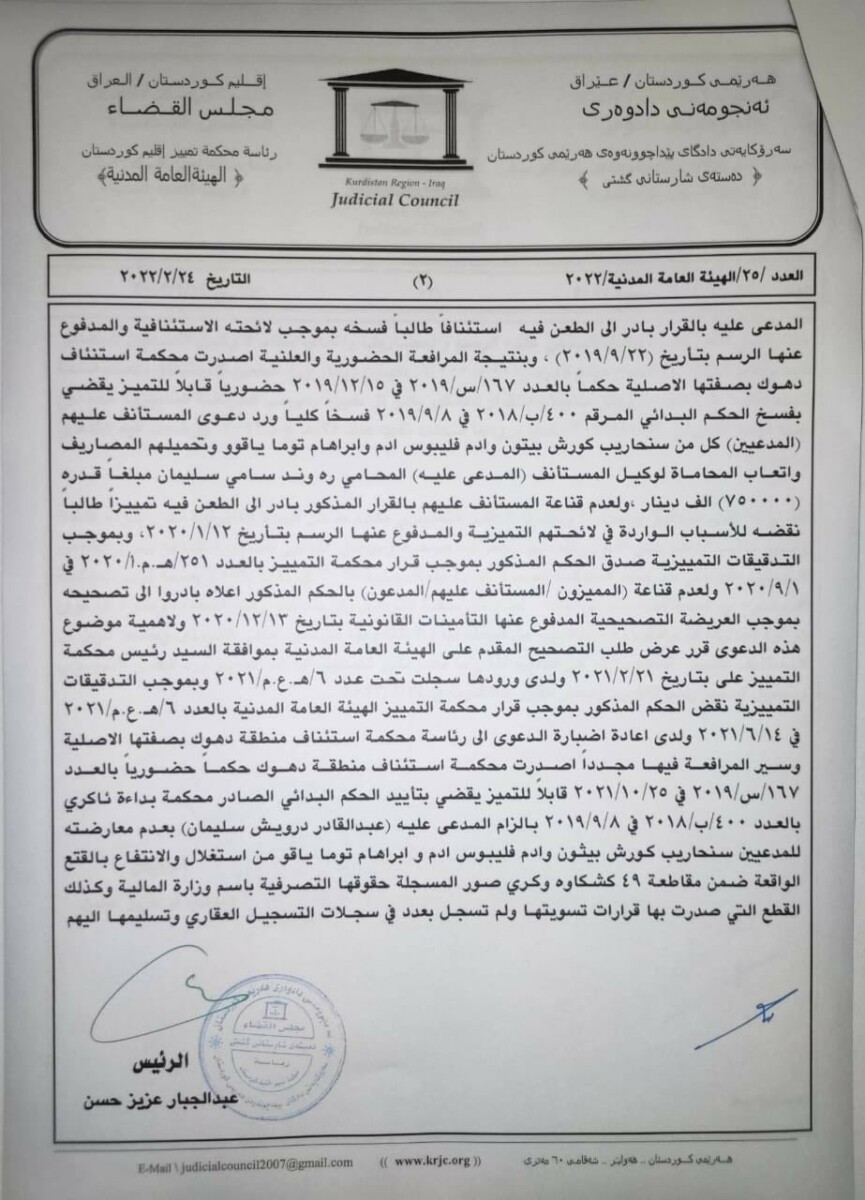
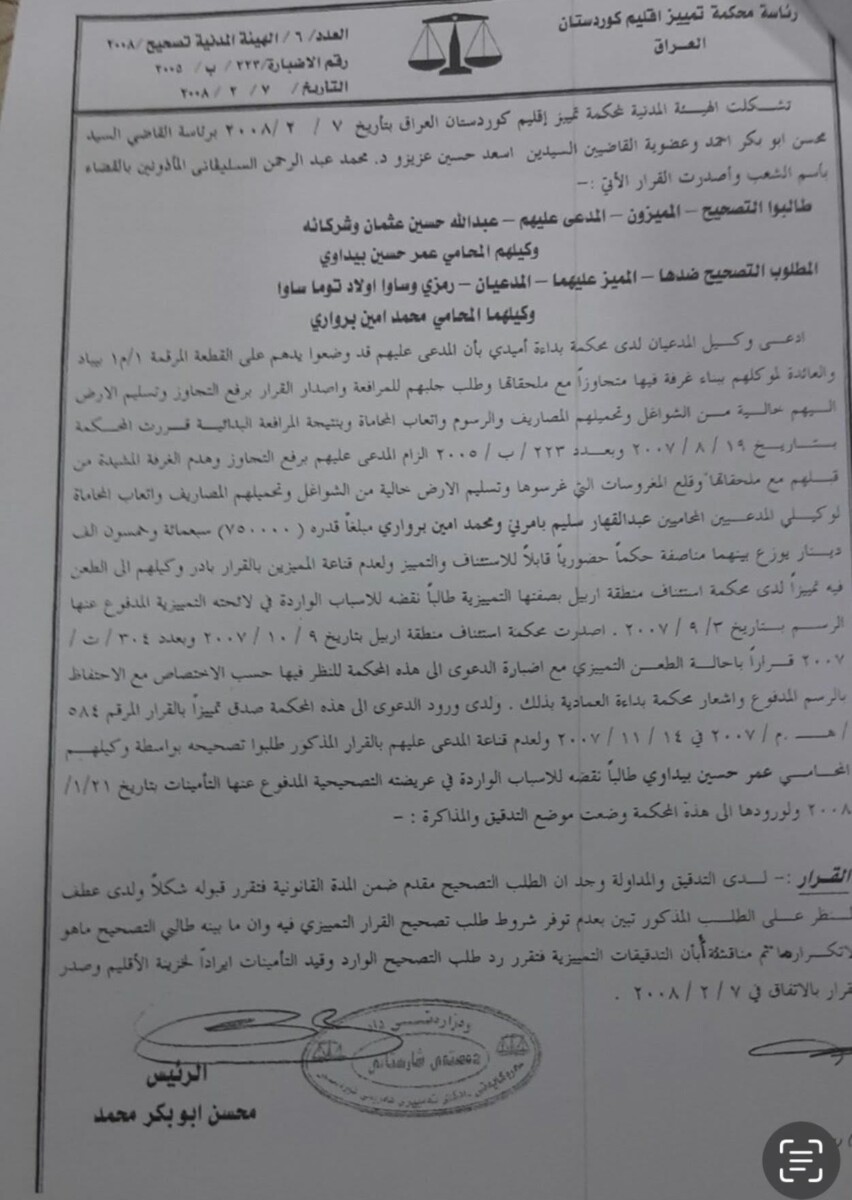
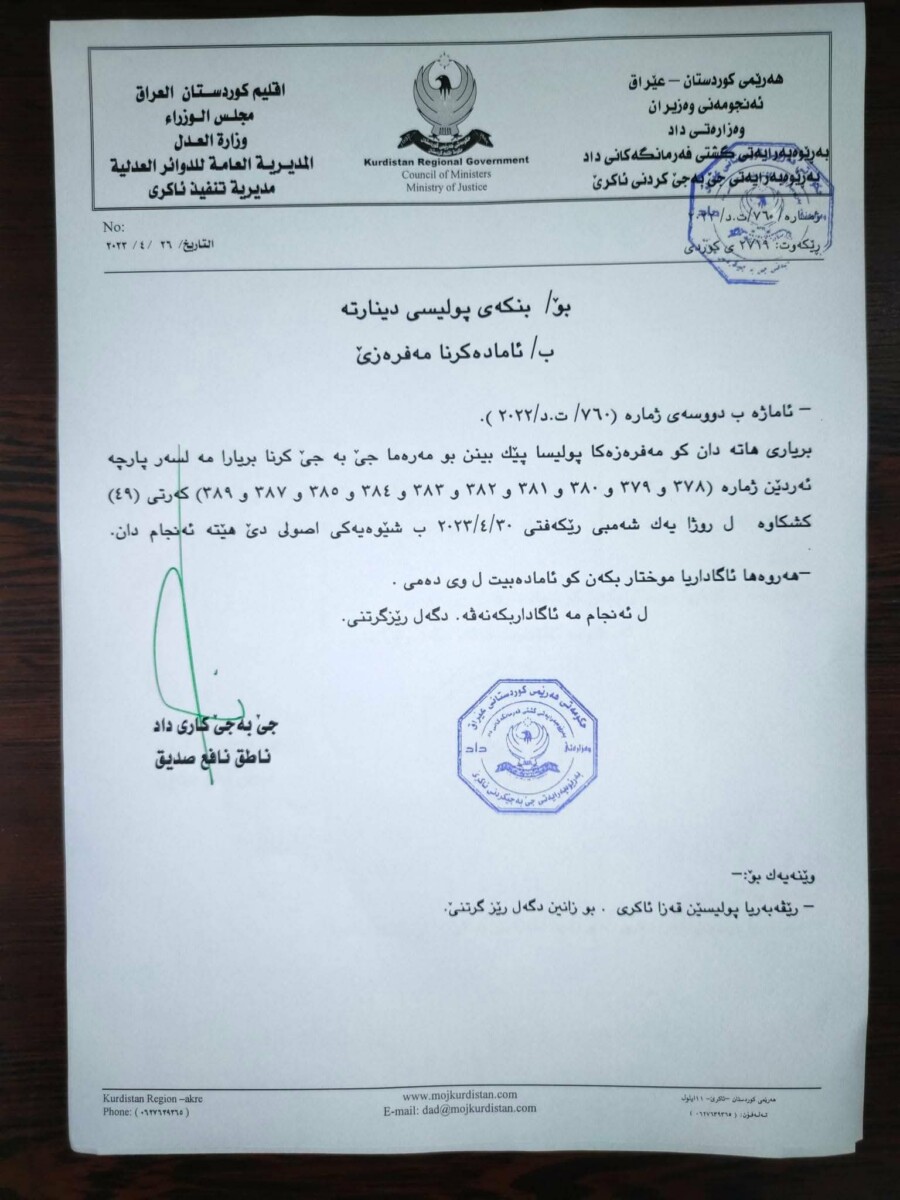
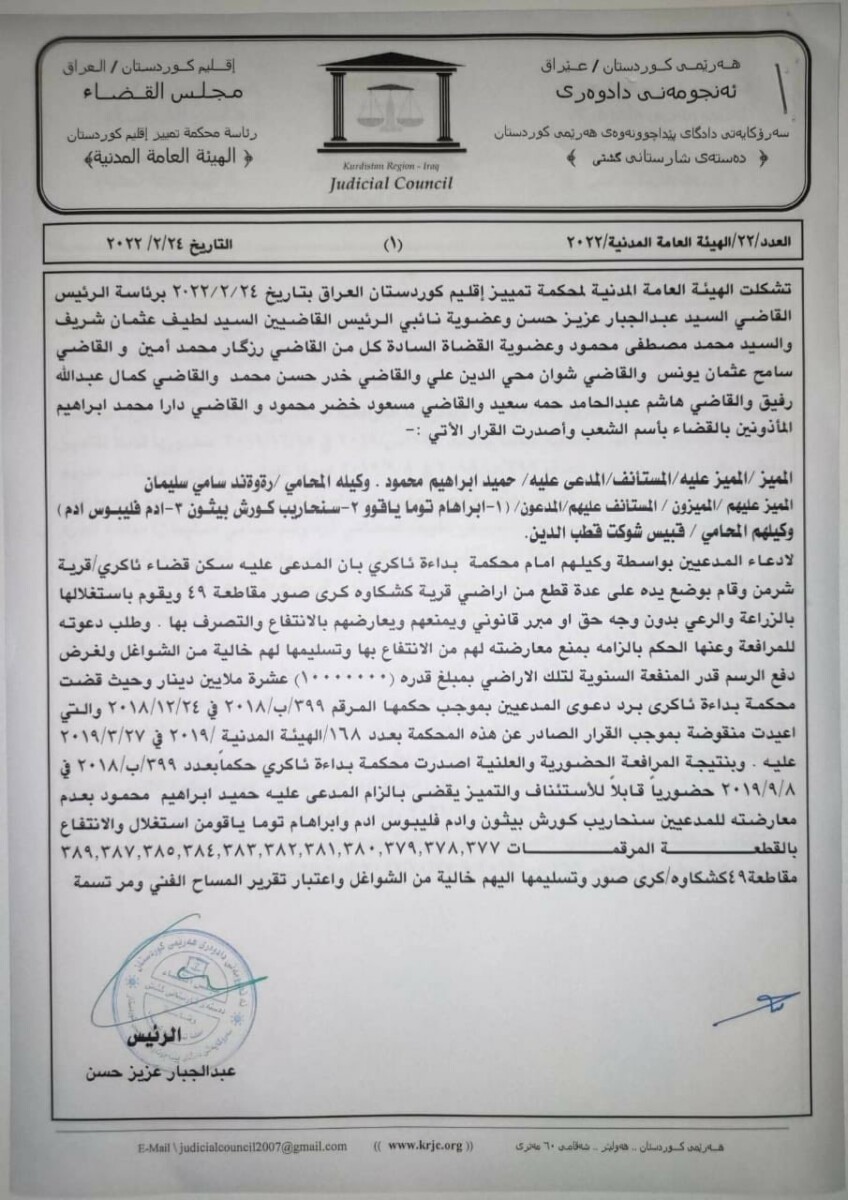
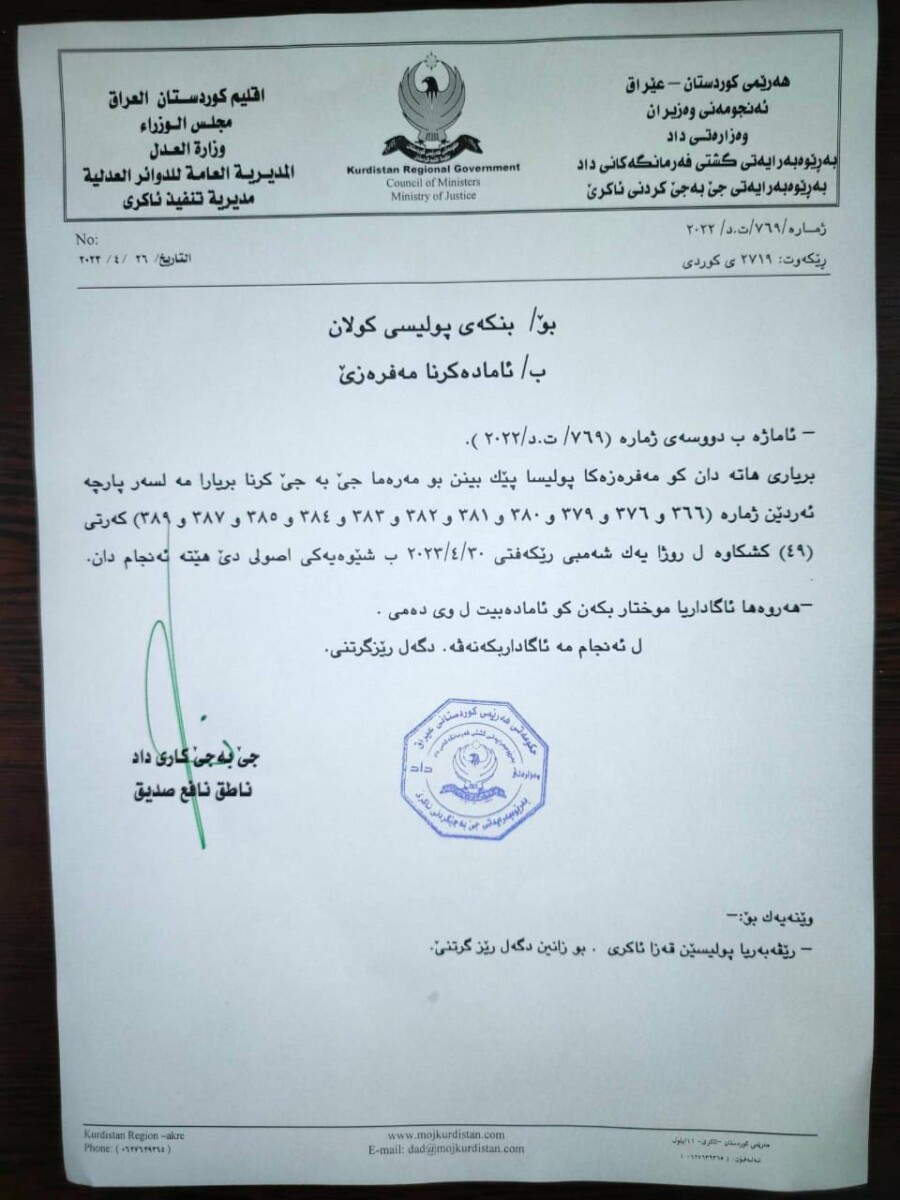
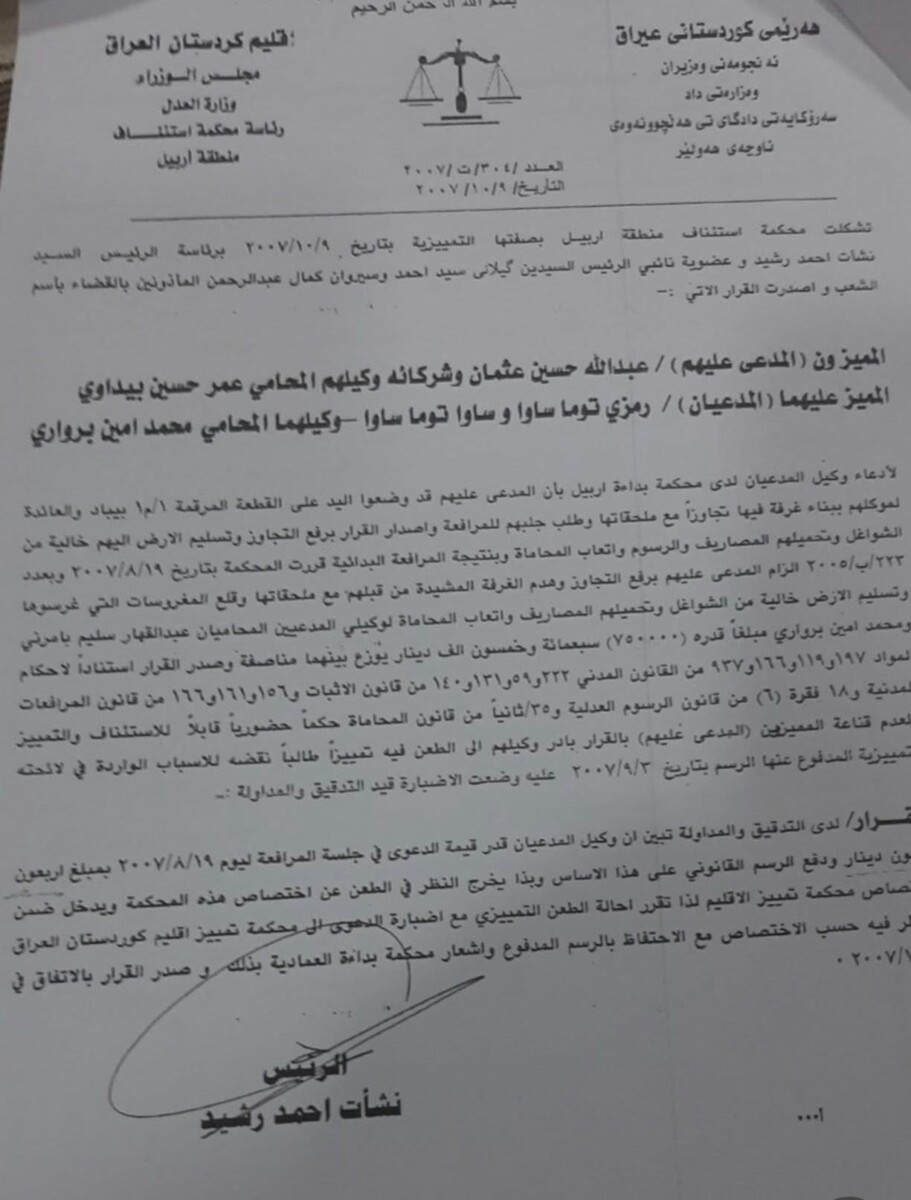
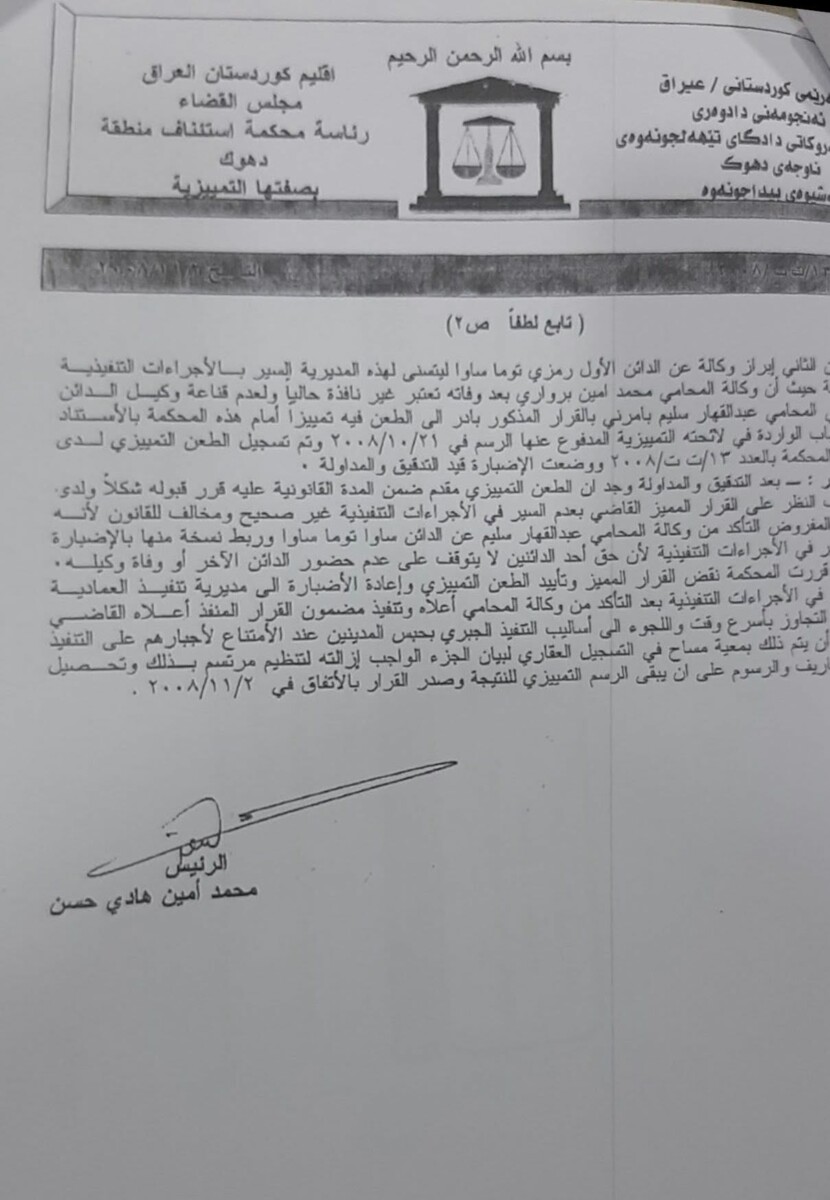
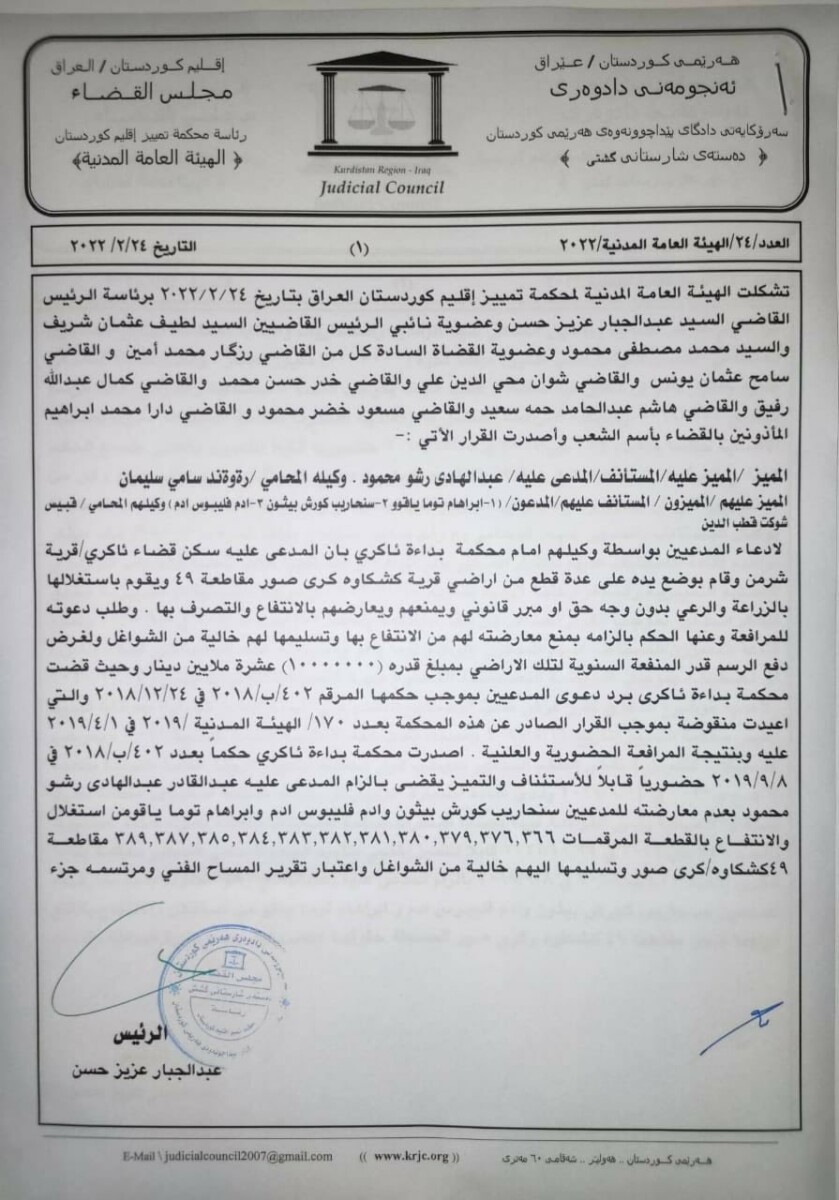
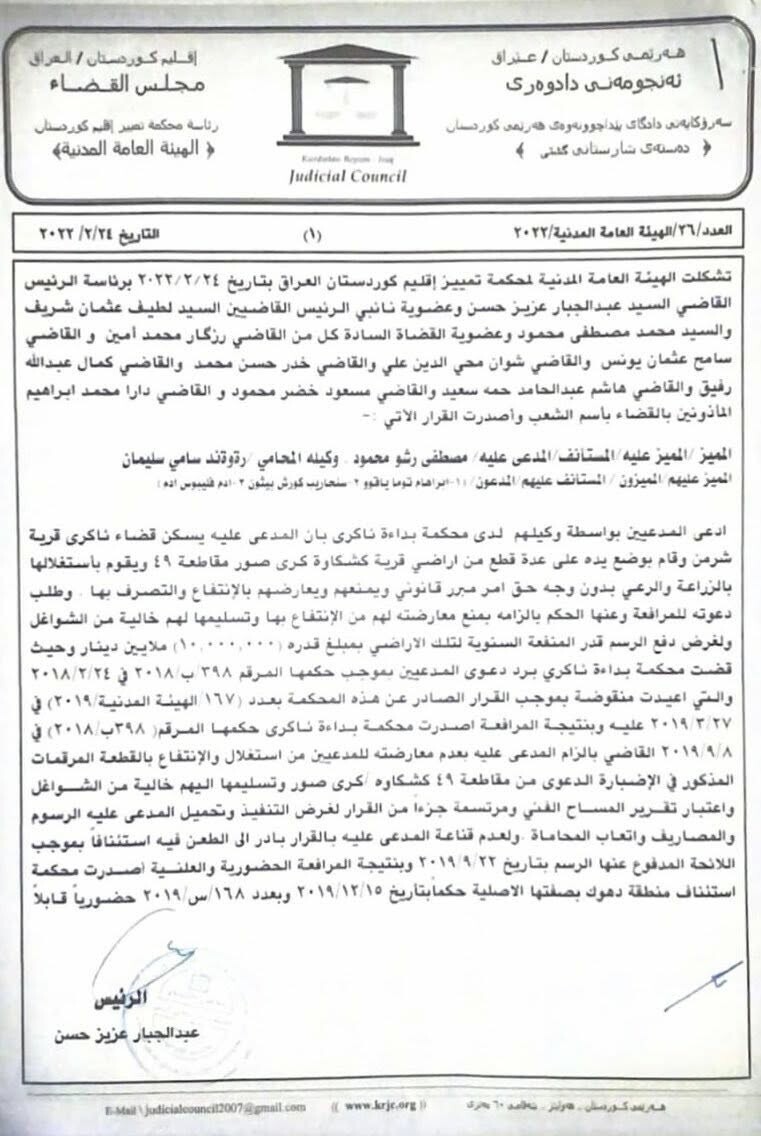
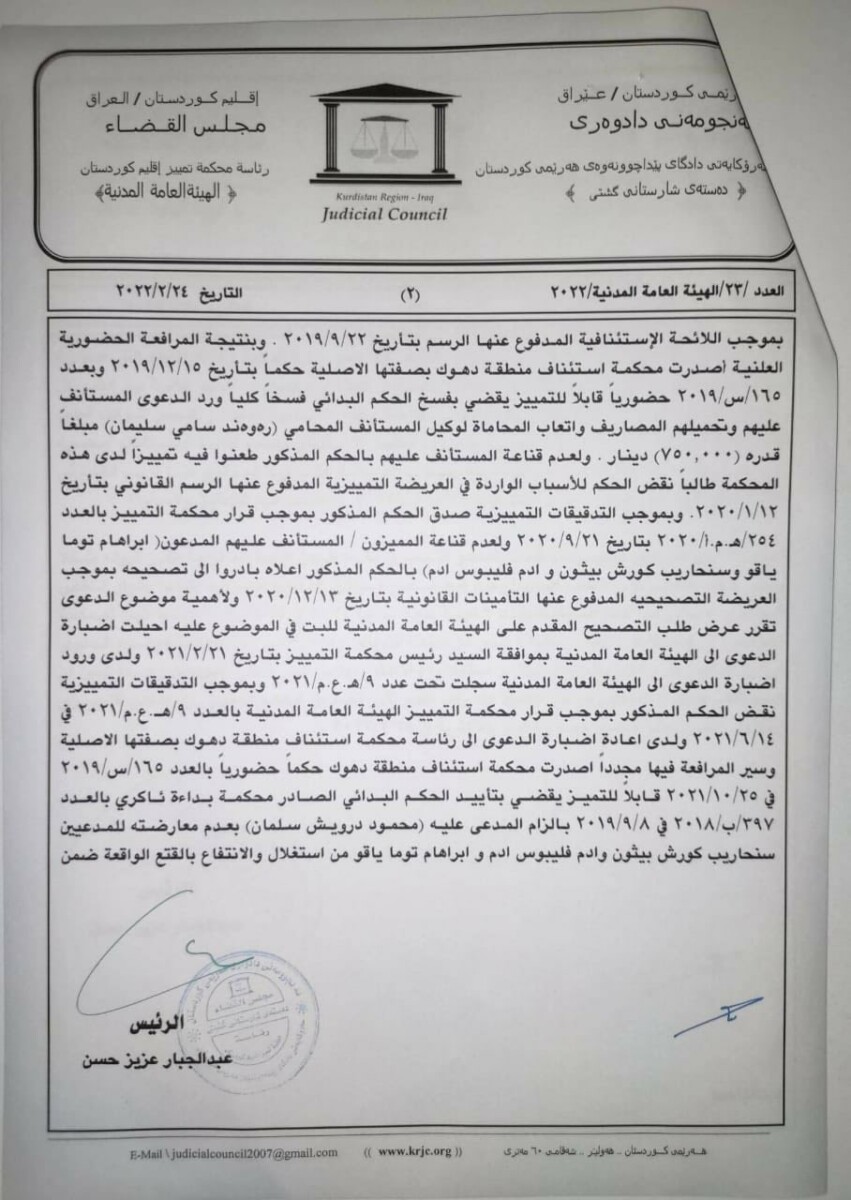
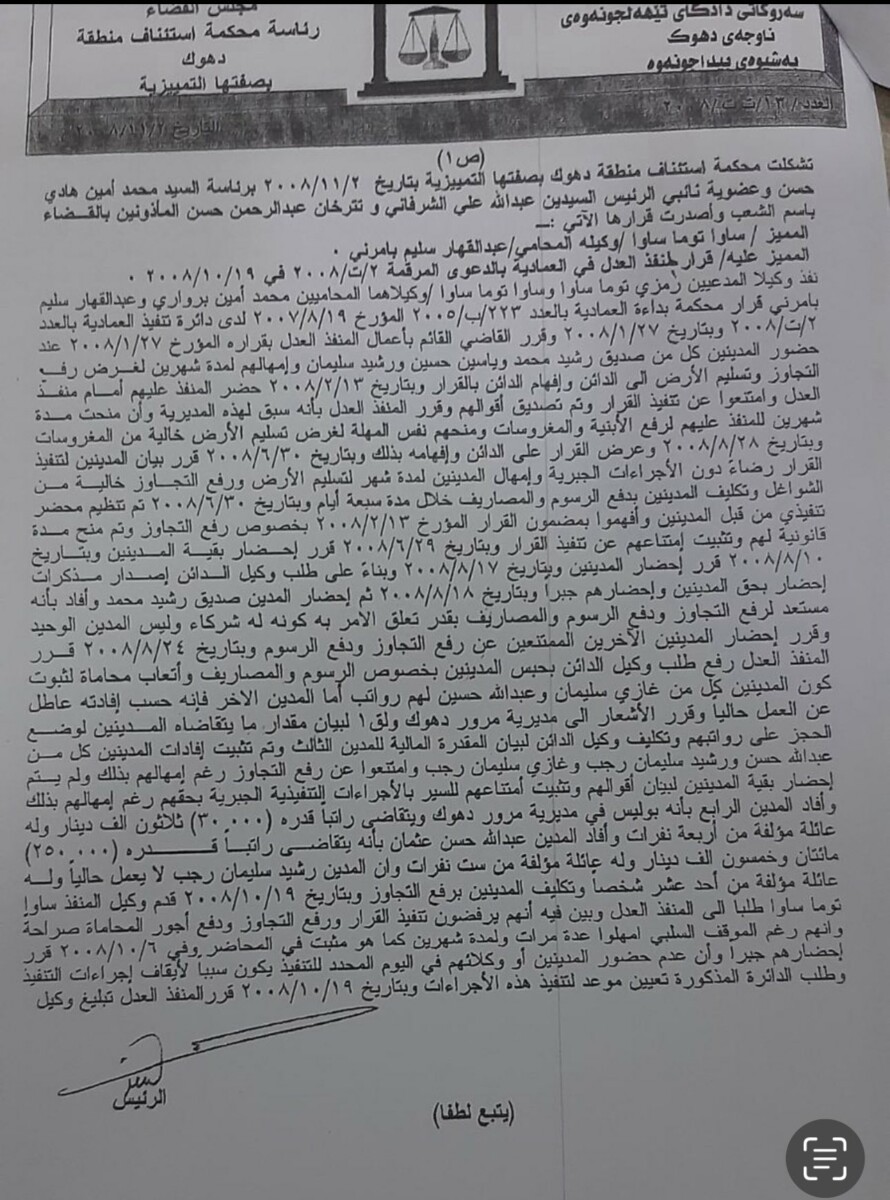
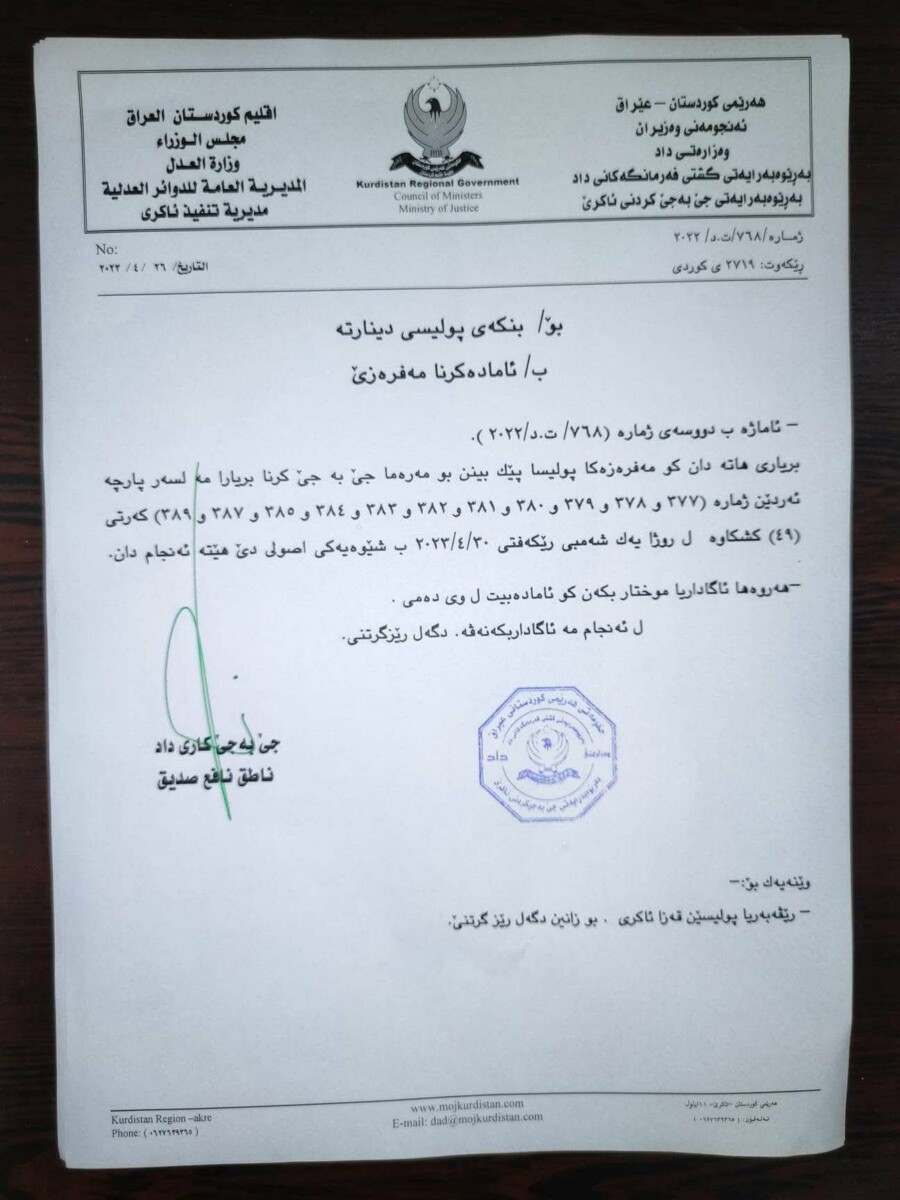
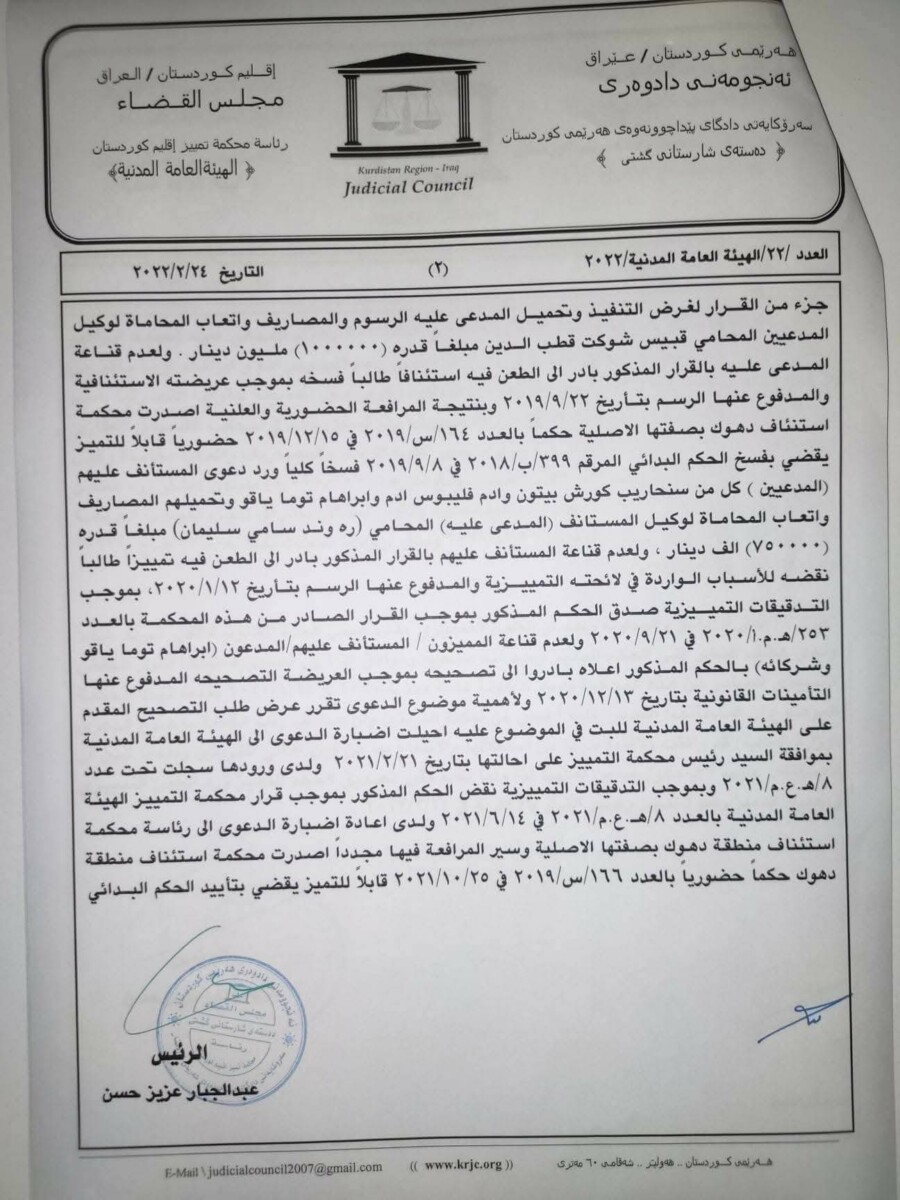
How much longer will the Kurdistan Regional Government remain unable—or unwilling—to enforce court rulings regarding the lands and villages of the Chaldean Assyrian people, which have been encroached upon or unlawfully seized, despite the passage of many years since those judgments were issued?
Numerous court decisions have been made in favor of our people—particularly concerning villages in Nala, Hezajut, Zakho, Sarsing, and Upper Barwar—yet the government has demonstrated no intention of implementing them. This inaction appears to stem from the fact that many of those responsible for the encroachments are influential individuals connected to the government or the ruling party.
In such a situation, where can our people turn for justice, if even court rulings are ignored?
In light of this, among other concerns, the institutions of power have come to embody practices of discrimination and inequality, falling short of the principles of fairness and equal opportunity. These practices are often based on political, ethnic, or religious affiliations, undermining the rights of the diverse communities within the Region. It is your responsibility to address this injustice and work toward restoring the justice and equality that have been eroded.
Today, Ankawa is seething with frustration, while false witnesses distort the truth—and yet, the authorities continue to rely on these accounts without showing any willingness to consider alternative perspectives or opposing voices. As a result, the legitimate demands of the people of Ankawa remain ignored and unaddressed.
The transformation of Ankawa—following the theft and unlawful seizure of its lands—into a center for questionable activities, facilitated by certain authorities, raises serious concerns about the true intentions behind these actions. The government has a duty to respond to the legitimate demands of its citizens. Or does it view the people of Ankawa as second-class citizens, whose voices can be dismissed while your party exploits its power to dominate the town and monitor the very lives of its peaceful, sincere residents?
What is being perpetrated under your rule against our people in both Erbil and Duhok is not only unjust—it is deeply humiliating and degrading. We will not remain silent. We will continue to speak the truth and stand firm in defending the rights of our Chaldean Syriac Assyrian people.
Hate speech targeting individuals on the basis of their ethnic or religious identity is on the rise in the Region. Yet, we have not seen any meaningful action from your government to confront or counter this alarming trend.
Our people are not leaving because of fear or threats to their physical safety, but because justice is absent and confidence in the government and its institutions has been profoundly shaken. This has created a climate of uncertainty, with the future appearing increasingly bleak and unreliable.
In conclusion, it is often said: Justice is the foundation of governance—if it stands, the state stands; if it falls, the state falls.
Yacoob Gorgis
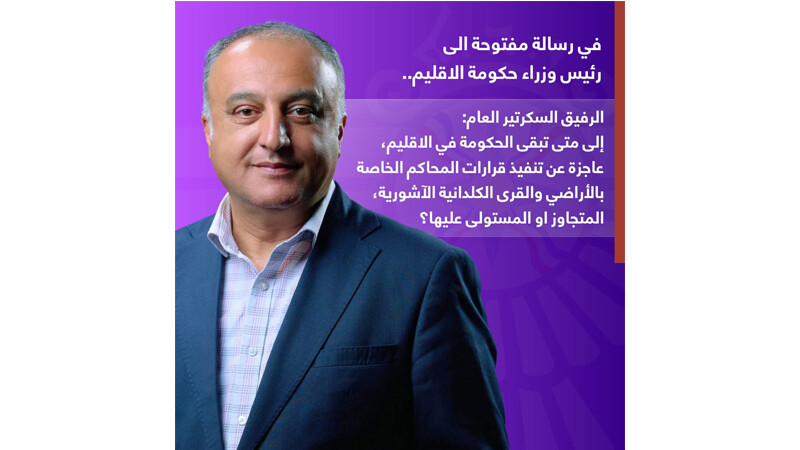
Secretary-General, Assyrian Democratic Movement
Note:
Attached are photocopies of court rulings that recognized the rightful ownership of our people over their lands and villages, which have been encroached upon and are still not enforced, despite the passage of several years.